Our Story

Our story

Built from a question that stayed unanswered for forty years.

Derek and Irene spent decades on the same problem, from completely different sides. They never knew. Then Lady, the failed police drug detector dog, joined our family and pulled the whole thing into focus.

Read on

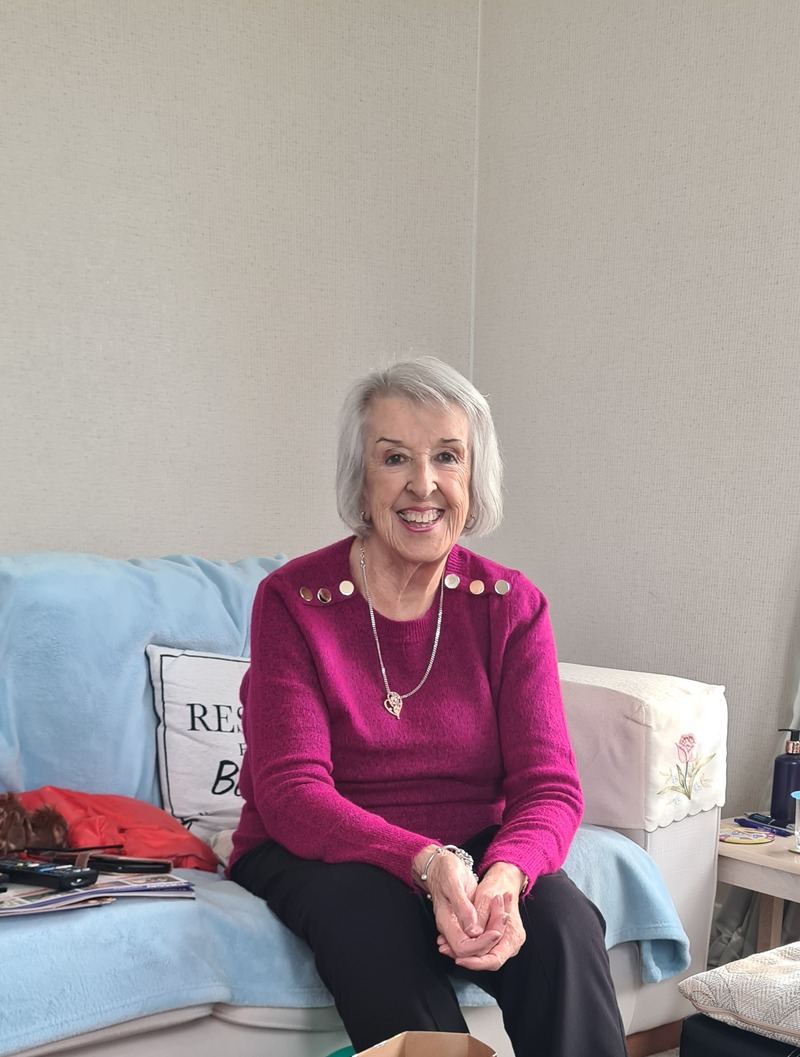
Irene

She wouldn’t give her daughter a straight answer.

For her whole life, no matter who asked, no matter what they were stuck on, no matter how many times they begged her to just tell them what to do, Irene Gannaway wouldn’t. She’d sit down, ask three or four questions, and let the person work it out themselves.

She was born in 1943 into a working-class family and left school at fifteen — the earliest opportunity available to her. Had she wanted to continue, further education would not have been financially possible. The education she could have given the world, nobody gave her. Friends still say it: if life had let her, she could have run anything she wanted. Instead she ran a household, and quietly raised a daughter who would one day help to build Poyntr.

When that daughter was small and would come in with a problem, the answer she got was always something like:

“If I keep telling you the answer, you won’t be able to think. So I’m not going to tell you. I’ll give you some pointers.

And then, instead of an answer, she’d ask:

  • “What do you think you should do?”
  • “What would you like to do?”
  • “What do you think they would want you to do?”
  • “And would that work for you?”

The daughter would, occasionally, lose patience and say what every child eventually says:

“Mum, why don’t you just give me your advice?”

And the answer to that was the whole company in two sentences.

Because in a lot of situations, especially with people, my advice could be the wrong advice for you. My job is to help you find the answer that’s right for you.

Years on, the daughter still finds herself ringing her mum and saying “can you give me some pointers?”. That’s where the name comes from. Not from a strategy session.

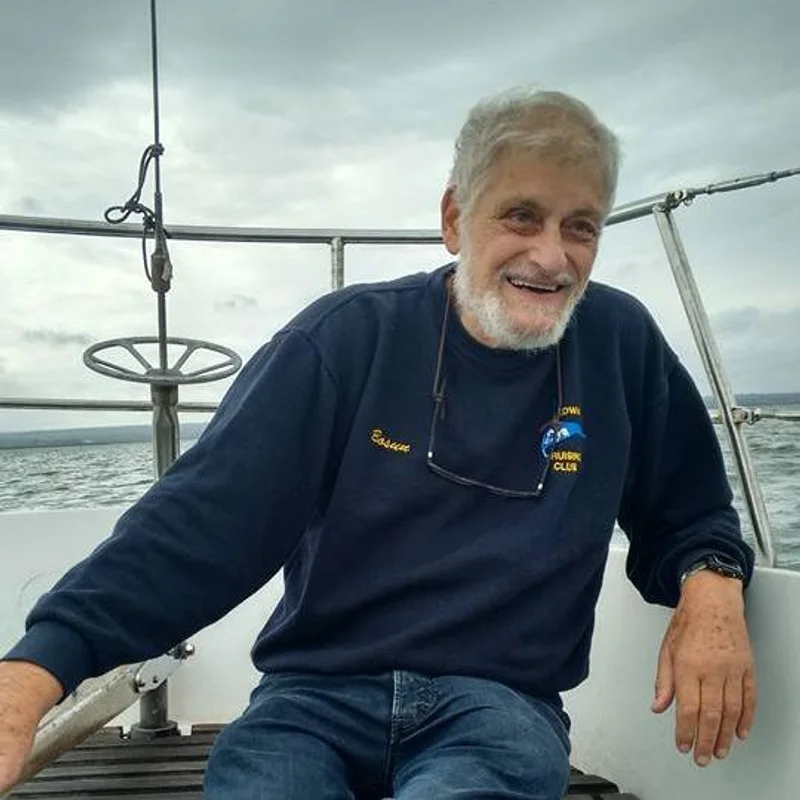
Derek

A generation earlier, on the other side of the family.

Someone else was asking the same kind of question. Loudly, in every school that would let him in.

Inner London Education Authority · Personnel Record

Ref: ILEA/EC/1985/247Received: 14 March 1985
Derek Esterson

Derek Esterson

Staff Inspector for Educational Computing,
Inner London Education Authority.
Chairman, Schools Committee of the
British Computer Society.

1933 – 2023

In 1985, every school in Britain was being sold a computer. Some of them got two. Everyone celebrated. Derek didn’t. He took the tube, then a bus, then walked, and he kept asking headteachers a question they didn’t especially want to hear:

Is any of this actually helping children learn?

The schools that took his answer seriously changed how they used the machines. The line he kept coming back to was the room mattered more than the machine. Technology earns its place, or it gathers dust.

Derek passed away in 2023. He didn’t live to see what we built. This is for him.

150+Secondary schools visited
1,500+Primary schools in his remit
40Staff he led at ILEA

“If there was one person who should have got a knighthood for making sure more children came out of school computer literate in the 1980s, it was Derek Esterson.”

Mike Fischer
Mike FischerFounder, Research Machines

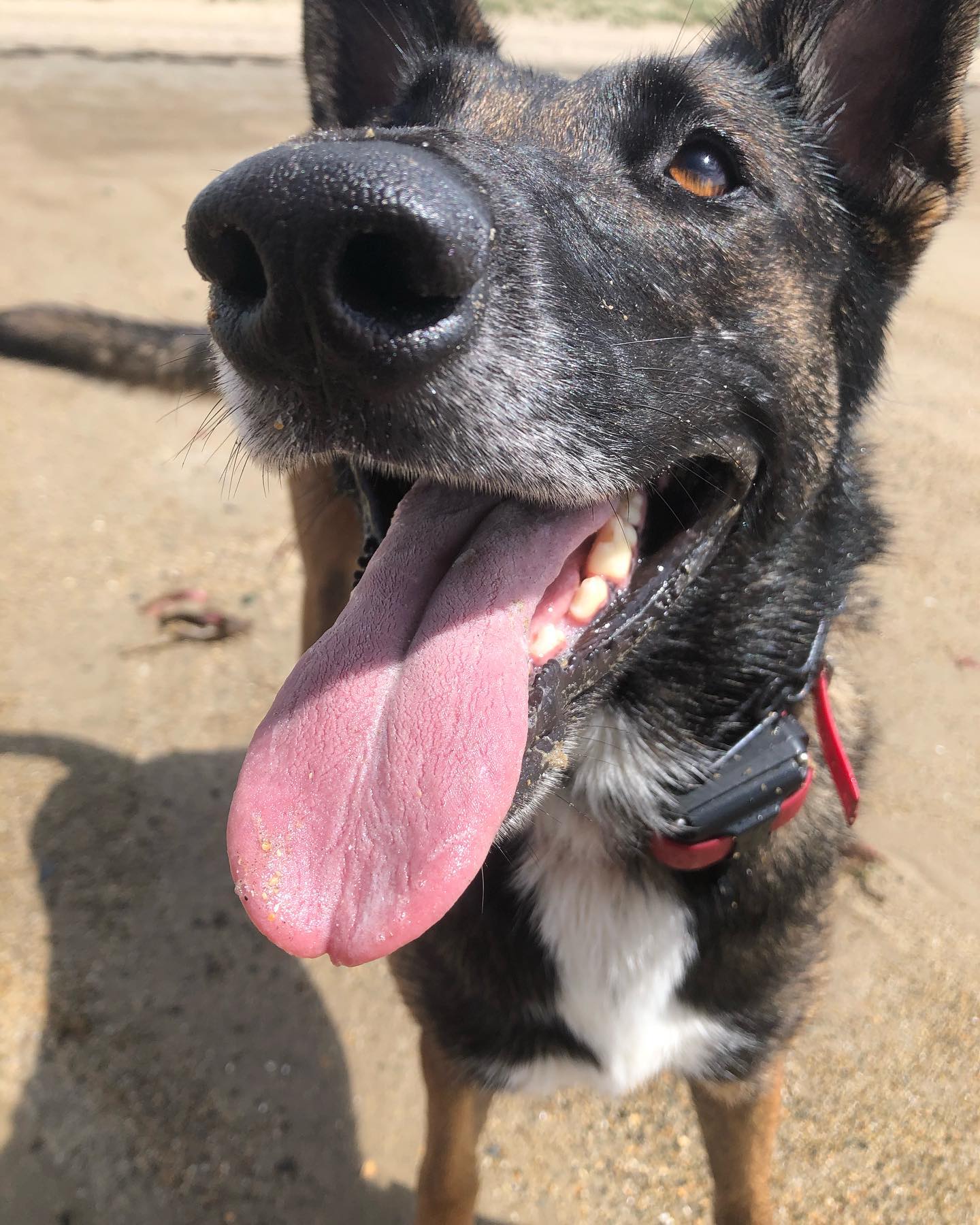
Lady

Then we got the dog.

Lady was bred to detect drugs for the police. She didn’t make it through the programme — but not for the obvious reason. She could find the drugs. She could find anything. She just couldn’t stop finding things.

Too reactive. Too alert.The kind of dog that watches you count change and knows you’ve been crying. The kind of failure that isn’t one.

She does it without trying. She reads posture, breath, where the eyes go, the half-second somebody pauses before saying they’re fine. The cliché is “dogs can sense things”. We used to roll our eyes at it. We don’t any more. The vet timed her once at thirty seconds ahead of a trained observer. Thirty seconds is enough time to change a conversation.

The world is full of systems built to measure compliance. Almost none of them are built to look. That’s what we ended up making. Not a replacement for Lady. A way of giving everyone else what she does without trying.

What we noticed

Surveys. Check-ins. Wellbeing audits.
None of it worked.

Thirty years of HR tools trying to find out how people were doing by asking them, on a form. It almost never caught what mattered until it was already too late.

Engagement surveyLands the week after the resignation does.
Quarterly pulseCounts burnout after someone’s already taken the sick leave.
“How are you?”Gets “fine”. Even from the people who very obviously aren’t.
Annual reviewNotices the withdrawal twelve months after the safeguarding referral would have helped.

Slow any one of them down for a second.

Sarah09:47

hey, you got a min?

James09:48

sure what’s up

Sarah09:48

just checking in. how’s the auth migration going

James09:51

yeah it’s fine, on track

Sarah09:52

cool. you good?

James09:53

yeah all good

thx for checking

Same shape, every Monday for the last three weeks.

The signal was always there.

In the pause before the answer.

In the word swapped for a safer one.

In the thing they very deliberately didn’t say.

We just hadn’t built the thing that could read it.
Until now.

How it works

We built the listener Lady was, in software.

Four decisions that turned out to be the whole thing.

Listen first. Don’t ask.

The whole shift is here. Forty years of school inspection and twenty of coaching practice end up at the same place: the conversation itself is the measurement. Asking the person ruins it.

Read meaning, not keywords.

149 behavioural detectors, trained on real coaching transcripts (with consent) and real safeguarding data (anonymised). They catch the shape of an argument, the texture of withdrawal, the moment confidence breaks. Off-the-shelf LLMs cannot do this; we tried.

Memory that earns trust.

Encrypted per person. Their session 20 knows what their session 1 said. They can read it back any time. They can wipe it. We hold a key that won’t open it without them.

Put it where people already talk.

Coach for individuals. Teams for leaders. A safe space for under-18s with the safeguarding wired in by design. An anonymised API for governments and researchers. Same engine; very different rooms.

What it’s doing now

So, yes, Derek.
It’s actually helping now.

Not because the technology got better. Because we finally built it to look the way Lady looks, and to ask the way Irene asks. Everywhere we set it down, it’s doing something specific:

  1. The team lead

    Sees her best engineer quietly pulling away, six weeksbefore he’d have resigned.

    85 growth and stress signals, on the conversation. Not on a survey. And the coaching gets sharper because it remembers.

  2. The Year 9 teacher

    Catches the change in one of her students, two weeksbefore the safeguarding meeting would’ve been called.

    149 detectors trained on the things adolescents already know how to hide on a form. Wired to the people in school who can act. Encrypted from everyone else.

  3. The minister

    Sees what’s actually happening in classrooms this week. Not in a white paper that lands in 2029.

    Continuous, anonymised national wellbeing signal. Updated weekly from what young people actually say.

Technology earns its place, or it gathers dust.

If you got this far

Leave your email below. Someone from the team will read it (the actual team, not a queue) and write back.

No spam. No newsletters. Just a response from our team.